![]()
THE SALEM WITCH TRIALS
|
This is not a story about witches. This is a story of the devastating effect rumor can have on the lives of the accused. The events of the Salem witch trials show what can happen when false accusations are made and people start blindly following those who are contributing to the hysteria.
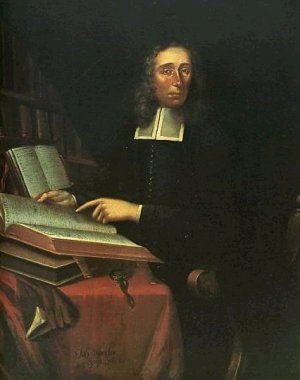
It is hard to find a hero in this story. We decided to concentrate on Increase Mather even though at first he favored the witch trials and did not condemn the judges who happened to be his friends. He apparently changed his mind when his wife along with other prominent figures were accused of witchcraft. "It were better," Mather admonished his fellow ministers (including his son Cotton), "that ten suspected witches should escape than one innocent person should be condemned."
Unfortunately, it sometimes takes the targeting of a high profile person before action is taken.
Increase Mather was born in 1639. His parents had joined other Puritans in coming to America to settle in New England. There were six boys in the family, and five of them became ministers. Increase was the youngest son.
His parents encouraged scholarship, and Increase was a good student. He entered Harvard at the age of 12 and graduated on his eighteenth birthday. He would later return to become the president of Harvard.
He spent four years in England advocating* for the colony and was able to secure a new charter. When Mather and the new governor, Sir William Phips returned to New England in May of 1692 the country was embroiled* in the events surrounding the Salem witch hunts.
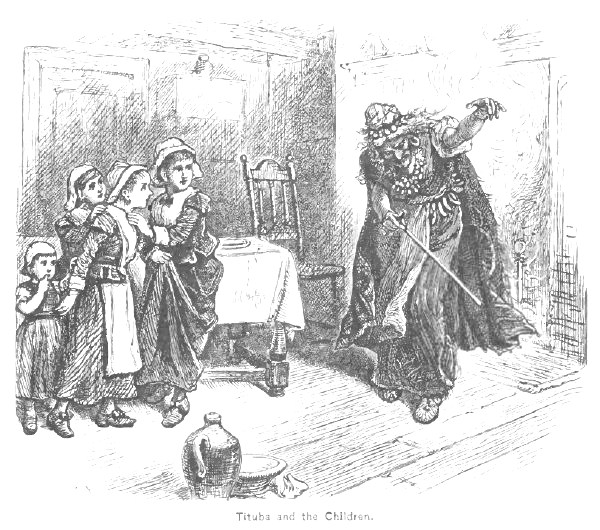
It all started in January of that year when some young girls began playing a fortune-telling game. They would gather in the home of the minister Parris and listen to stories told by his slave Tituba (tih TOO buh). Some of the girls fell ill, and the village physician decided the girls were bewitched. Advised by Mary Sibley, a member of the congregation, Tituba and her husband John Indian, another servant in the house, baked a "witch cake" to persuade the girls to tell who was bewitching them. They began to identify certain people as those who were responsible. They named Sarah Good and Sarah Osborne. The two women along with Tituba were arrested. ![]()
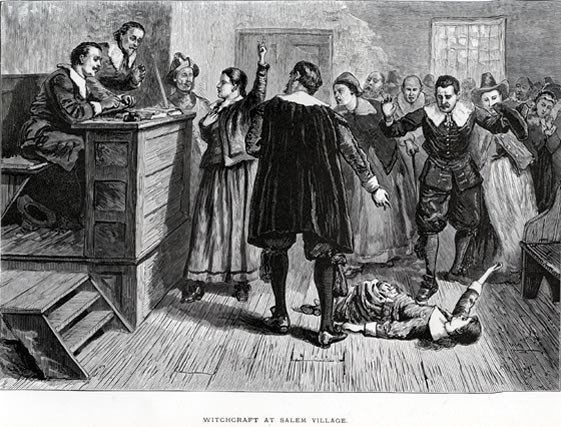
Others who were arrested over the next few months were Rebecca Nurse, John Proctor, Susannah Martin, Elizabeth Howe, Sarah Wildes, and Rev. George Burroughs. Bridget Bishop was arrested and tried in June, and she was the first to be hanged. Sarah Osborne would die in prison, but the others were hanged on Gallows Hill in Salem.
Sarah Good's five-year-old daughter had been imprisoned with her, and when her mother was hanged, the child still remained in prison for months because she had told them she had a pet snake and they found a mark on her finger which they said was a "devil's mark". After she was released from prison she became an unmanageable child.
Supposedly a witch would not be able to recite the Lord's Prayer. Although George Burroughs recited it perfectly while he was standing on the gallows, they hanged him anyway.
Another man Giles Corey refused to stand trial and was pressed to death when they put heavy rocks on him until he could no longer breathe.
And what about Tituba, what happened to her? It is believed that in 1693 she was sold to another owner for the price of her prison fees.
Twenty people died as a result of the Salem Witch Trials. In 1694 the courts declared that witchcraft was no longer an offense in Massachusetts Bay Colony. Many of those responsible recanted* and expressed contrition* for their part in the deaths of all those innocent people. Some of the families sued for money to recompense* for the death of their loved ones, but they only got a meager amount; 578 English pounds to be distributed among the survivors.
Could Increase Mather have done more to stop the witch trials? Possibly. Even though he argued against using spectral* evidence in the trials, he could have had more influence had he not defended the judges of the trials. (Let it be noted that he didn't speak out against the use of spectral evidence until his wife had been accused of being a witch.)Spectral evidence was testimony that the accused witch's spirit (i.e. spectre) appeared to the witness in a dream or vision. The dream or vision was admitted as evidence. Source: Wikipedia
Mather's first wife died and he remarried, but he became ill and finally died on August 23, 1723.
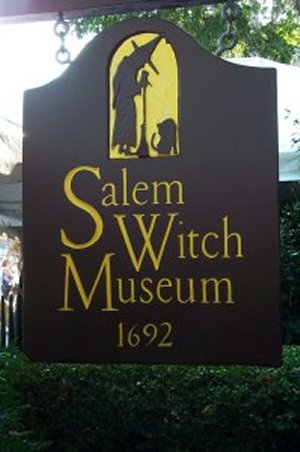
Salem Witch Museum
From these tragic events we can learn lessons of tolerance and understanding. We have seen the results of rumor, superstition*, and false accusation. Lives are devastated and families are torn apart when these things prevail.
If you are ever in the New England area you can visit the Salem Witch Museum in Salem, Massachusetts and learn more about the witch trials that occurred in 1692.
![]()
Increase Mather
at Wikipedia
Increase Mather
biography by Mathew Madden
The Story of the Witch Hunt
video from Discovery.com
The Witch Trials
from Discovery School
Salem Witch Trials
Salem Witchcraft Hysteria
from National Geographic
Salem Witch Museum
Salem Massachusetts
Salem Witchcraft Trials 1692
Salem Witch Trials 1692
Eyewitness to History.com
Narratives of the Witchcraft Cases
online essay by Increase Mather, edited by George L. Burr
Salem Witch Trials
online work by Increase Mather at the University of Virginia
Ten New England Leaders
online book by W.Walker. See page 173 for Mather
Puritans vs. Witches - Audiobook on CD
By The Vision Forum, Inc
Perhaps the most godly group of Christians to populate North America were the Puritans of New England. Yet no group has been more ruthlessly villified by modern historians, and no subject more misrepresented than their infamous Salem Witch Trials. In this brilliant, scholarly presentation, Dr. Paul Jehle goes beyond the popular rhetoric to expose the truth. He reveals both the wisdom and the failures associated with the Trials, and he makes the case that God used them to lay the foundation for the greatest revival in American history - the Great Awakening. 1 CD. 64 minutes.
The Witchcraft of Salem Village
By Shirley Jackson / Random House, Inc
Stories of magic, superstition, and witchcraft were strictly forbidden in the little town of Salem Village. But a group of young girls ignored those rules, spellbound by the tales told by a woman named Tituba. When questioned about their activities, the terrified girls set off a whirlwind of controversy as they accused townsperson after townsperson of being witches. Author Shirley Jackson examines in careful detail this horrifying true story of accusations, trials, and executions that shook a community to its foundations.
![]()
Salem Witch Trials Word Search
Salem Witch Trials Crossword Puzzle
Salem Witch Trials - Word Scramble
Online Crossword Puzzle
Online Word Search
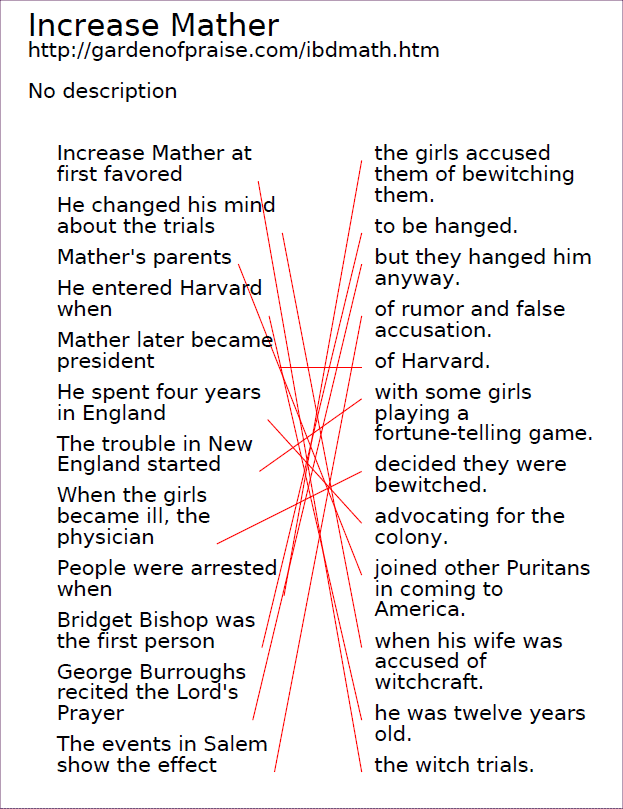
Increase Mather Study Sheet
Worksheet
Excerpts from Ten New England Leaders
![]()
Work a Jigsaw Puzzle
From Word Central's Student Dictionary
by Merriam - Webster
(Pronunciation note: the schwa sound is shown by &)
spectral
'spek-tr&l
Function: adjective
of, relating to, or suggesting a specter : GHOSTLY
advocate
Pronunciation: 'ad-v&-kate
Function: verb
to speak in favor of : argue for
embroil
im-'broi&l
Function: verb
1 : to throw into disorder or confusion
2 : to involve in conflict or difficulties
recant
rih-'kant
Function: verb
to take back publicly an opinion or belief
contrite
k&n-'trIt
Function: adjective
feeling or showing sorrow and remorse for a wrong that one has done
contrition
Pronunciation: k&n-trish-&n
Function: noun
the state of being contrite
recompense
Pronunciation: 'rek-&m-pen(t)s
Function: verb
to pay for or pay back
superstition
'soo-p&r-'stish-&n
Function: noun
1 : a belief or practice resulting from ignorance,
fear of the unknown, or trust in magic
2 : an unreasoning fear of nature, the unknown,
or God resulting from superstition
Biographies in this Series
Presidents of the
United StatesGeorge Washington
1st U.S. President
John Adams
2nd U.S. President
Thomas Jefferson
3rd U.S.President
James Monroe
5th U.S. President
Andrew Jackson
7th U.S. President
Abraham Lincoln
16th U.S.President
Franklin D. Roosevelt
32nd U.S. President
John F. Kennedy
35th U.S. President
James Madison
4th U.S. President
Theodore Roosevelt
26th U.S. President
American Patriots Benjamin Franklin
patriot and statesman
Francis Scott Key
Star Spangled Banner
Deborah Sampson
woman soldier
in the Revolutionary War
World Leaders Constantine
Roman Emperor
Alexander the Great
conqueror
Winston Churchill
British Prime Minister
Inventors Alexander Graham Bell
telephone
Johann Gutenberg
printing press
Cyrus McCormick
mechanical reaper
The Wright Brothers
first airplane
Henry Ford
Automaker
Thomas A. Edison
electric light bulb
Sequoyah
Cherokee alphabet
Nikola Tesla
700 patents
. Explorers Christopher Columbus
explorer
Meriwether Lewis
explorer
Robert Peary
Arctic explorer
John Muir
Naturalist
Matthew Henson
Arctic Explorer
Sir Edmund Hillary
Mr.Everest
Kit Carson
Indian agent
"Johnny Appleseed"
orchardist
. Women who made
a differenceClara Barton
founder of the Red Cross
Helen Keller
overcame blindness & deafness
Florence Nightingale
founder of
nursing profession
Joan of Arc
religious and military leader
Amelia Earhart
Aviator
Annie Oakley
sharpshooter
Susan B. Anthony
Suffragette
Elizabeth Keckly
Seamstress
Harriet Tubman
deliverer of slaves
Anne Frank
Diarist
Eleanor Roosevelt
Humanitarian
. Scientists George Washington Carver
botanist and educator
Sir Isaac Newton
explained gravity and
properties of light
Marie Curie
scientist, physicist
Louis Pasteur
Biologist
Albert Einstein
physicist, genius
Galileo
Astronomer, physicist
Educators Noah Webster
writer of dictionary
Booker T. Washington
leader and educator
Aristotle
Greek philosopher
Physicians Hippocrates
father of medicine
Walter Reed
discovered cause of yellow fever
Albert Schweitzer
humanitarian
Religious Leaders Increase Mather
Salem witch trials
. Athletes Lou Gehrig
baseball player
Wilma Rudolph
Olympic gold medal winner
Tiger Woods
golfer
Civil Rights
LeadersMartin Luther King
civil rights leader
Rosa Parks
bus desegregation
Sojourner Truth
Former slave
Frederick Douglass
Abolitionist
Mary Ann Shadd Cary
Civil rights leader
James Forten
Inventor, abolitionist
Composers Beethoven
composer
Artists John James Audubon
artist and naturalist
Gutzon Borglum
sculptor, Mount Rushmore
Ansel Adams
photographer
Home
Back to Famous Leaders
![]()
Puzzles courtesy of Armoured Penguin
Photos courtesy Wikipedia