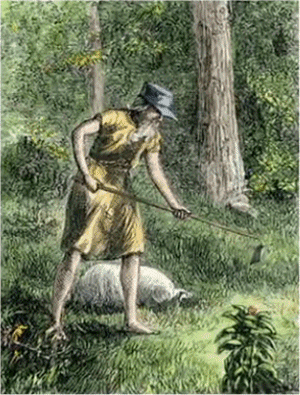
JOHN CHAPMAN

(Johnny Appleseed)
Orchardist
1774? - 1845


John Chapman, Johnny Appleseed
John Chapman from the
Harper's New Monthly Magazine, 1871
 

Johnny Appleseed lived in the days of early America. He became a legend, and many stories were told about him. Some people do not know he was a real person. His name was John Chapman, and he was born in the state of Massachusetts in 1774. His father, Nathaniel, was a soldier in the Revolutionary War. His mother, Elizabeth, died when he was still a very young child.

When he grew up he made it his life's work to plant fruit trees in the developing parts of the country. He carried sacks of apple seeds with him and planted orchards throughout the Northwest Territory. The states of Ohio, Michigan, Indiana, and Illinois were formed from this area. His mission was to plant fruit trees so the settlers, as they moved west, would have something to sustain them as they tried to survive in the new land.
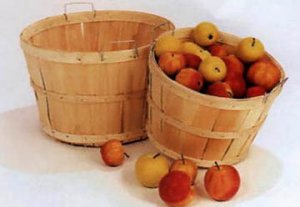
In 1802 he carried sixteen bushels of apple seeds down the Ohio River. He had two canoes lashed together to transport the seeds. Most of the time he carried the seeds in leather bags on horseback, or on his own back. He planted acres and acres of apples. Someone has estimated that during his lifetime Chapman planted enough trees to cover an area over 100,000 square miles!

Only one plant did he introduce to the countryside that turned out to be an invasive* plant. He thought the dog fennel plant had anti-malarial* qualities and planted it beside every homestead. Whether it really had medicinal qualities is debatable, but it tended to take over the area where it was planted and was considered a weed.

John was a good businessman, charging a few cents for the trees he grew. If someone couldn't pay, he would barter for clothing or food, or he gave the trees away without cost or told them they could pay him later. However, the money he collected was used to plant more orchards, or he gave it away to someone who was in need.

He dressed simply, wearing clothes he had traded for trees. Sometimes he cut a hole in a sack and wore it as a shirt. It is said he didn't wear shoes most of the time though sometimes he might find shoes that someone had discarded, and he would wear them. The two shoes he happened to be wearing might not match. Material "things" just did not matter to him. Once a soldier gave him a hat and he wore that. You see pictures of him wearing a pot on his head for a hat. He could use the pot to gather fruit and berries to eat.

He did not eat meat because he didn't want to harm any animals. If he saw an animal being mistreated, he would buy the animal and give it to another settler; someone more humane* who would care for the animal.

According to a Harper's Magazine article he did not prune nor graft trees, but looked upon the cutting of them as a kind of cruelty.

When he was invited to eat a meal with a family he never sat down until he was sure the children had enough to eat first. He was a kind gentle person.


Photo from Harper's Magazine 1871 Larger view

John Chapman was a Christian and conducted his life in a Christ-like manner. He was a follower of a religious leader named Emmanuel Swedenborg. He would preach to the families he visited. He called it delivering news "right fresh from heaven".
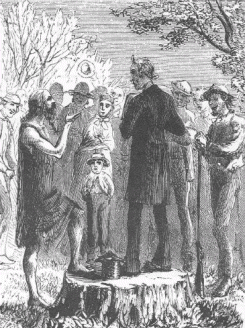
One day a preacher came to the area where Johnny was working and in his sermon decried materialism* asking, "Where now is there a man who like the primitive* Christian is traveling to heaven barefooted and in coarse raiment?" After he had made the statement several times, John in his coffee-sack shirt stepped forward and said, " Here's your primitive Christian." The preacher quickly dismissed the congregation.

During the war of 1812 the British and the Indians were roaming the country killing the settlers. John went from house to house warning the people to take shelter and try to protect themselves. He traveled night and day to warn them, not stopping to eat or rest.

John Chapman died in 1845 at the age of seventy-two. He had spent 46 years planting trees across the country. The death of this extraordinary man was mourned by many. In the years since his death numerous honors have been given him. A postage stamp was made in his honor. A school was named for him, and an annual festival is held in Fort Wayne, Indiana as well as other cities.
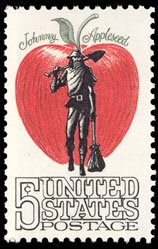

U.S. Postage Stamp 1966


Read a review of a Fictional Story about John Chapman.


Johnny Appleseed

Johnny Appleseed listen to a radio broadcast "People in America"

Johnny Appleseed, Orchardist
Allen County Public Library
(linked to PDF with permission)

Harper's New Monthly Magazine
1871 article about Johnny Appleseed

A History of Knox County, Ohio From 1779 to 1862 Inclusive
by Banning Norton

History of Wayne County, Ohio From the Days of the Pioneers
and First Settlers to the Present Time

by Ben Douglass

History of Logan County and Ohio
O. L. Baskin & Co, Historical Publishers

History of Morrow County and Ohio
O. L. Baskin & Co

History of Licking/Knox County, Ohio, Its Past and Present
by N. N. Hill, Jr.
(students may want to increase the text size)

History of Crawford County and Ohio
Baskin & Battey, Historical Publishers

Historical Collection of Ohio, Vol. II
by Henry Howe

Johnny Appleseed

Johnny Appleseed
at Wikipedia

Johnny Appleseed Story

Johnny Appleseed
information at Junior Ecology Club

What's the Story With Johnny Appleseed
from the Straight Dope

Johnny Appleseed
pictures to color at DLTK

The Story of Johnny Appleseed
at Tooter 4 Kids.com

Johnny Appleseed Stories
written by second graders, Austin ISD Texas

Lesson Plans:

How Did Johnny Appleseed Help the Pioneers Move West?
Kindergarten level

Johnny Appleseed Lesson Plans
at A to Z Teacher Stuff


401382: Johnny Appleseed: The Story of a Legend Johnny Appleseed: The Story of a Legend
By Will Moses / Puffin

Johnny Appleseed was a legend even in his own time-stories abounded about the kindhearted woodsman who planted thousands of apple seeds from Pennsylvania to Indiana. The real Johnny Appleseed was born John Chapman in a small village in Massachusetts. When he was a young man, he set off for the western frontier and along the way collected bags of apple seeds from cider mills. As John Chapman's apple orchards grew in number, so did the tales of Johnny Appleseed. In this wise and witty story, Will Moses relates the life of a great American folk hero who helped open and tame the wild frontier. Recommended for ages 4 to 9.


John Chapman Word Search


John Chapman Crossword Puzzle


John Chapman - Word Scramble

Online Crossword Puzzle

Online Word Search


John Chapman Study Sheet


Worksheet


Work a Jigsaw Puzzle


From Word Central's Student Dictionary
by Merriam - Webster


materialism
muh TIR e uh liz um
Function: noun
a tendency to attach too much importance to physical comfort and well-being

humane
hyoo MANE
Function: adjective
marked by sympathy or consideration for others

primitive
PRIM uht iv
Function: adjective
of or relating to the earliest age or period as the primitive church

invasive
in VASE iv
Function: adjective
tending to spread

malaria
muh LER e uh
Function: noun
a disease caused by protozoan parasites in the red blood cells,
passed from one individual to another by the bite of mosquitoes,
and marked by periodic attacks of chills and fever


Biographies in this Series

Presidents of the
United States
George Washington
1st U.S. President

John Adams
2nd U.S. President


Thomas Jefferson
3rd U.S.President


James Monroe
5th U.S. President


Andrew Jackson
7th U.S. President

Abraham Lincoln
16th U.S.President

Franklin D. Roosevelt
32nd U.S. President

John F. Kennedy
35th U.S. President


James Madison
4th U.S. President

Theodore Roosevelt
26th U.S. President

American Patriots Benjamin Franklin
patriot and statesman

Francis Scott Key
Star Spangled Banner

Deborah Sampson
woman soldier
in the Revolutionary War

World Leaders Constantine
Roman Emperor

Alexander the Great
conqueror
Winston Churchill
British Prime Minister

Inventors Alexander Graham Bell
telephone

Johann Gutenberg
printing press

Cyrus McCormick
mechanical reaper

The Wright Brothers
first airplane

Henry Ford
Automaker

Thomas A. Edison
electric light bulb

Sequoyah
Cherokee alphabet

Nikola Tesla
700 patents

.
Explorers Christopher Columbus
explorer

Meriwether Lewis
explorer

Robert Peary
Arctic explorer

John Muir
Naturalist

Matthew Henson
Arctic Explorer

Sir Edmund Hillary
Mr.Everest

Kit Carson
Indian agent

"Johnny Appleseed"
orchardist

.
Women who made
a difference
Clara Barton
founder of the Red Cross

Helen Keller
overcame blindness & deafness

Florence Nightingale
founder of
nursing profession

Joan of Arc
religious and military leader

Amelia Earhart
Aviator

Annie Oakley
sharpshooter

Susan B. Anthony
Suffragette

Elizabeth Keckly
Seamstress

Harriet Tubman
deliverer of slaves

Anne Frank
Diarist

Eleanor Roosevelt
Humanitarian

.
Scientists George Washington Carver
botanist and educator

Sir Isaac Newton
explained gravity and
properties of light

Marie Curie
scientist, physicist

Louis Pasteur
Biologist

Albert Einstein
physicist, genius

Galileo
Astronomer, physicist

Educators Noah Webster
writer of dictionary

Booker T. Washington
leader and educator

Aristotle
Greek philosopher

Physicians Hippocrates
father of medicine

Walter Reed
discovered cause of yellow fever

Albert Schweitzer
humanitarian

Religious Leaders Increase Mather
Salem witch trials

.
Athletes Lou Gehrig
baseball player

Wilma Rudolph
Olympic gold medal winner

Tiger Woods
golfer

Civil Rights
Leaders
Martin Luther King
civil rights leader

Rosa Parks
bus desegregation

Sojourner Truth
Former slave

Frederick Douglass
Abolitionist

Mary Ann Shadd Cary
Civil rights leader

James Forten
Inventor, abolitionist

Composers Beethoven
composer

Artists John James Audubon
artist and naturalist

Gutzon Borglum
sculptor, Mount Rushmore

Ansel Adams
photographer


Home


Back to Famous Leaders


Puzzles courtesy of Armored Penguin